Episode 11: Betrayed but Not Broken: What Joseph Teaches Us About Emotional Healing Description YT & RedCircle
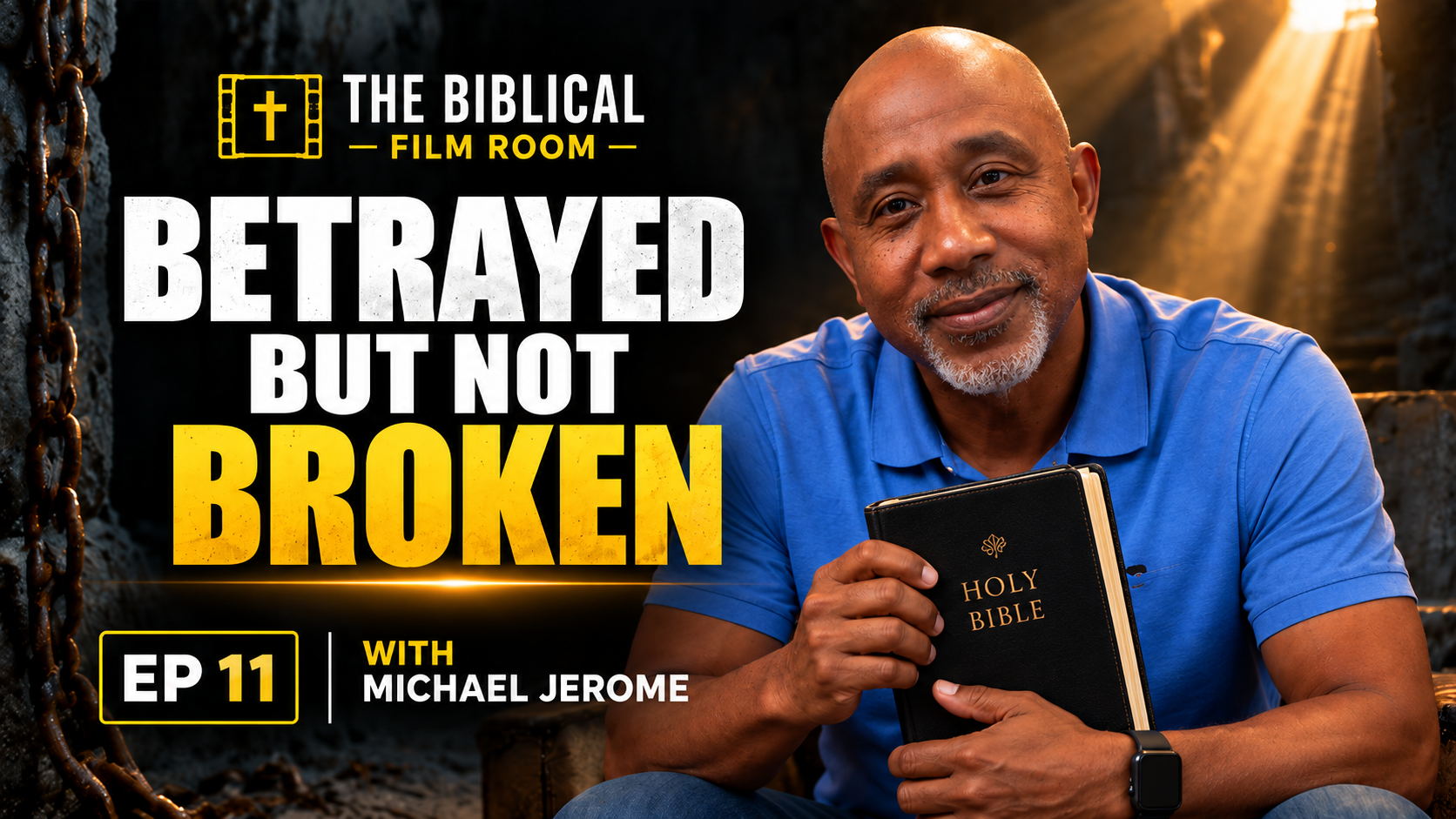
Betrayed but Not Broken: Healing Through the Story of Joseph
The Reality of Betrayal
Hey, let me ask you a question. What if the people who hurt you the most don't get to determine who you become?
Joseph, who we're going to look at today, was betrayed by his own brothers, sold into slavery, falsely accused, and forgotten. And yet his painful experience did not have the final word over his life. Did you know that?
Today, we're going to examine what we can learn from Joseph about processing pain without allowing it to define us. Because Joseph's pain was real. And he didn't pretend that his pain wasn't painful.
And so we're going to unpack his story today. And as we look at the story, I think it's fair to ask: what did Joseph experience emotionally? Because there was some emotional pain, some emotional hurt and baggage that he experienced.
And what can we reasonably observe from his words and actions? This isn't some fairy tale, this is a real life experience. And finally, I want to highlight two important lessons we can learn from Joseph about processing pain without allowing it to actually define us.
So, welcome to the Biblical Film Room, a podcast where we examine our lives through the lens of Scripture so that we might heal emotionally, connect relationally, and grow spiritually. I'm Michael Jerome, your host. Thank you for joining.
Broken by betrayal, the pain that just seems to hang on. I wanted to discuss this today because quite a few of my clients are walking through some type of betrayal in their lives. And whether that betrayal is an erotic betrayal, a betrayal by a sibling or parent, perhaps, friends, maybe you were betrayed or let down by a coworker, you know, something deeply affected you in a close relationship.
All these different types of betrayals, I’ve had the I guess the honor, I wouldn't call it a privilege, to help people walk through these challenges in their lives. And so I thought it was important enough to take the time to talk about the pain of walking through the brokenness that betrayal can cause and what can happen as we get on the other side of that.
The Film Study: Joseph’s Path Through Pain
And so at the time of this recording it's Tuesday November the 9th, and I'm excited about you being here on this podcast. It's an honor to be able to host this and to talk about this topic. And so we're gonna go ahead and dive in.
Joseph's story. We're gonna watch the film here on Joseph's story and see what we can gather from it. First of all, Genesis 37, rejection and betrayal by his brothers.
And so we're just going to read a little bit about the story. I'm going to narrate a few things as well. So in Genesis chapter 37, verse 3 through 11, that's where the story is.
And in verse 4 it says, When his brothers saw that their father loved him more than any of them, they hated him and could not speak a kind word to him. In verse five, he tells his brothers a dream, and they hated him all the more because of his dream. And then verse 8 says the same thing. And they hated him all the more because of his dream.
Verse 11. Because of his dreams and the favoritism, his brothers were jealous of him. So the brothers didn't want to hear what he had to say. And they were greatly impacted by his cockiness.
They were jealous. Joseph was cocky and arrogant. There was some favoritism that was shown by the father that also impacted their relationship.
And here's the thing, this is kind of a side note. Favoritism is a sort of portrayal that a lot of individuals experience growing up in their family of origin. And so the brothers felt this, I guess this betrayal by their dad and because Joseph was the favorite and they began to mistreat him.
And so that was a very unpainful situation. I don't know if you've ever been hated by a sibling. I haven't, I'm so grateful, or a close relative or or maybe a friend or a teammate.
But I would say that that's a hard thing to go through to carry. The Bible talks about how difficult it is to stand before jealousy and hatred, and that was tough. And then in verses 18 through 30, they plotted against him and betrayed him.
Okay? And so it says, but they saw him in the distance, and before he reached them, they plotted to kill him. Here comes that dreamer, they said to each other, let's kill him and throw him into one of these cisterns, and say a ferocious animal devoured him.
Then we'll see what comes of his dreams. You see, rejection and betrayal. Ouch. Man, that had to hurt.
Had to hurt deeply. I bet his circumstance told him lies about his identity as he was lying in this cistern. And then later he was taken from the cistern by a band of bandits and sold as a slave in another country, and this country being the country of Egypt.
Rejection and False Accusations
And so here's this young kid who had some dreams, and he tells the dreams to his brothers, and they're like, we don't want to hear it. And they already had this hatred towards him, and that led to them betraying him, abandoning him.
Genesis 39 talks about false accusation and imprisonment. False accusation and imprisonment. This is what Joseph went through.
He is falsely accused of coming on to his master Potiphar's wife and thrown into prison because of that. So in verse 17, she tells this story: That Hebrew slave you brought us came to me to make sport of me, but as soon as I screamed for help, he left his cloak beside me and ran out of the house.
And the Bible says when his master heard this, he burned with anger, and Joseph's master took him and put him in prison. Falsely accused, wrongly imprisoned. That had to be very disheartening, scary.
I imagine the lie this situation whispered to him about his identity and about his security and God's concern for him. Genesis chapter 40. The story goes on. It gets kind of worse.
Forgotten and Overlooked
Forgotten by someone he helped. So chapter 40, he's imprisoned. He accurately predicts a favorable outcome of a dream that one of the prisoners had, a cupbearer.
And yet the Bible says that as Joseph telling this interpreting this dream that this cupbearer has, he was expecting a favorable outcome for himself. And yet he doesn't get one.
Verses 14 and 15 says, as Joseph is telling the guy the outcome and letting him know this is what I would love to see happen. But when all goes well with you, remember me and show me kindness.
Mention me to Pharaoh and get me out of this prison. I was forcibly carried off, and even here I have done nothing to deserve being put in a dungeon. Wow.
Cupbearer gets restored. Just as Joseph had said to him in this interpretation of the man's dream, yet instead of remembering Joseph and mentioning Joseph to the Pharaoh, this is what the Bible says happened in verse 23. It says the chief cupbearer, however, did not remember Joseph. He forgot him.
Wow. That had to be tough. He forgot? He's like, what?
After all that Joseph had done for him, you forgot? That's mind-boggling to me. And again, enduring an experience like this, I would say, likely cause him to wrestle with his identity.
I want you to reflect on that. Because life circumstances can lighten us also about our identity. But you know what?
The Reunion and the Test of Character
Thank God for chapter 41. Chapters 41 through 45. A dramatic, dramatic change in circumstances and a reunion with his brothers.
In chapter 41, Joseph is brought in by the Pharaoh to interpret a dream that he had. The dream was troubling him. Joseph gives an accurate interpretation.
By the way, he's finally remembered by this guy who had forgotten. Say, hey, remember that you said, remember that time you were mad at me and you threw me in prison? Hey, there was this guy who was there. I had a dream, I told him the dream, and then he interpreted for me.
Maybe this guy can help you out. And so they went and got Joseph out. Joseph interprets the dream. He gives an accurate interpretation of a famine that would happen and actually how to save the nation in this famine.
And so Joseph, man, I tell you, I don't I can't remember the exact time frame it was from the time that he was betrayed by his brothers and thrown into the cistern to the time he was led out of prison and rose up to second command, I believe it was about twelve years. Hey, that's a long time.
And just year after year, all the misfortune that happened, all the disappointment that he experienced. And so Joseph he's rewarded for his discernment and wisdom and his place in charge of all of Egypt. Joseph is even given a wife who bore him two sons.
And then the real tests came. Years later, during his famine, Joseph meets his brothers. An opportunity for vindication.
Vindication. I bet, man, in some ways, man, he wanted to be vindicated. And at first, when Joseph encounters his brothers, he responds harshly to them.
He tests them to see if they are sincere and honest men coming from the land of Canaan. So we pick up the story in Genesis chapter forty two and verse seven. It says: As soon as Joseph saw his brothers, he recognized them, but he pretended to be a stranger and spoke harshly to them.
And it says although Joseph recognized them, they didn't recognize him. He begins to interrogate these guys. He accuses them of being spies and throws them into prison for three days.
For nothing, for no reason, except for he he wanted revenge. He starts out wanting revenge and but then over time his heart you see as you read the story his heart softens. In fact, throughout the entire rest of the story involving his interactions with his brothers, you see Joseph wrestling with his feelings, wrestling with his emotions.
Genesis forty-two, twenty-four says he turned away from them and began to weep, but then came back and spoke to them again. In chapter 43 and verse 20, it says, Deeply moved at the sight of his younger brother Benjamin, Joseph hurried out and looked for a place to weep.
He went into his private room and wept there. Then finally, in chapter 45, when Joseph reveals himself to his brothers, it says, Then Joseph could no longer control himself before all of his attendants. He told them to leave.
He cried out, Have everyone leave my presence. So there was no one with Joseph when he made himself known to his brothers. And he wept so loudly that the Egyptians heard it, and Pharaoh's household heard about it.
Lessons in Redemption and Perspective
Genesis 45. He extends forgiveness to his brothers. Layered though it was. And it took time.
It took some time. And God blesses him with a wife, as I said earlier, who bears him two sons. And Joseph sees a big God behind a big picture of everything he went through after he reveals himself to his brothers.
That's amazing. Again, he he he sees, he sees a big God behind the big picture. And that's something that really stood out to me.
And it's something as I walk through clients who've gone through the betrayal, some type of relational betrayal, and the pain that that you experience in that and the wrestling that they go through and that I imagine Joseph went through. In order to get on the big other side of that, he had to see a big a big God behind the big picture.
And I think it helps him. Everything he went through, he reveals himself to his brothers. So listen to how he does this.
It's amazing. Genesis forty-five, verse four. He says, Come close to me. I'm your brother Joseph, the one you sold into Egypt, and now do not be distressed and do not be angry with yourselves for selling me here because it was to save the lives, the saving of many lives that God sent me ahead of you.
Verse eight, so then it was not you who sent me here, but God. And in Genesis fifty, verse nineteen, don't be afraid. Am I in the place of God?
You intended to harm me, but God intended it for good, to accomplish what is now being done, the saving of many lives. So then don't be afraid. I will provide for you and your children.
And he reassured them and spoke kindly to them. I tell ya, again, you know, it it's one of it's one of my favorite stories in in all the Bible. Because here's a guy that experienced some deep pain and he he went through the layers.
You know, he went through the the the layers of processing his emotions. And as we talked about earlier, what did Joseph experience emotionally? You see the roller coaster, man.
Right, the roller coaster of emotions, wanting to care, wanting to embrace, but wanting to punish, wanting to get revenge, wanting to say, you guys deserve this lashing that I'm gonna give you. Then over time, as this big God behind these behind the big picture begins to reveal himself, it's it's it's it's really powerful.
Applying the Film to Your Life
So now as we examine the film, what can we learn? What can we learn from Joseph that we can see in him that we can apply to our own lives? And then I hopefully that would make sense as we move forward as we experience challenges in our life.
Hey, one thing is pain is real, and faith doesn't require us to pretend betrayal didn't hurt. It does. You may be going through a painful circumstance, a difficult marriage, financial debt that keeps getting larger, recurring communication breakdown.
Those things are hard. And you don't have to pretend. Joseph wrestled with the pain and the wondering.
I think we see that in the story. And your circumstances aren't your identity. Joseph's position changed repeatedly, right? Constantly.
But his story didn't end in a pit or a prison. That's the great thing about that story. And what you're going through is undoubtedly tough.
And it doesn't have to get the final verdict. So please, my friend, hey, don't don't confuse forgiveness with pretending. Joseph eventually confronted his brothers and tested their actions before fully revealing himself.
Did you see that? And I I tell people, particularly in situations in a marriage or a dating relationship where there's been erotic betrayal, someone has to you have to test someone's actions before fully revealing yourself, exposing yourself, opening yourself up to them again.
Does that make sense? And so walking through couples, walking with couples through something like that is is tough because sometimes the offender wants to be forgiven or accepted back too soon.
And that's not a a good situation for the person who's been wounded, who's been betrayed to be in. And so that takes time. Test their actions before fully revealing yourself, like opening yourself, letting that person back in.
Joseph does that. That's important. You don't have to let people who deeply hurt you back into your life immediately.
Joseph needed time and distance from his brothers. And so do you. Be wise.
Joseph was harsh at first. You saw you saw that. You saw that in the story. He wrestled with his feelings.
He he falsely accused them and wrongly imprisoned them. Just like what happened to him with Potiphar's wife. Did you see that?
Where he accused them of being spies, puts them in prison for for for three days. Now I'm not suggesting that you should do that with a spouse or partner or a good friend or or a coworker.
But yet healing, it takes time, right? We see that in the story. His reunion with his brothers unfolded, right, over through several encounters, not one quick conversation.
Don't let anybody talk to you about this quick forgiveness. Just go ahead. That's not even biblical.
Again, deep betrayal, erotic betrayal, where there's been lies, deceit, there's been you've they just forgot about your personhood and how they treated you. Two things: time, distance.
Time, distance. Joseph needed them both, and and so do you. And so, conversations need to be had about the betrayal, the infidelity, the abuse, the negligence, the irresponsible behavior.
Conversations need to be had. You can acknowledge the harm without surrendering your future to it. Does that make sense?
You can say to someone, that didn't feel good, and here's how it impacted me, and not allow it to become a part of your story or a part of the story you constantly rehearse. Doesn't have to be that way.
So how do how do we apply the film to our lives? I want to challenge you to apply the film, this film study on Joseph to your life.
What painful experience are you still carrying? Because it can lie to you about your true identity, about who you really are, and about who God is. How has it shaped the way you see yourself or other people? Or God?
Is there bitterness there, self-criticism, faithlessness? In your relationships, are you responding to the person in front of you or reacting to the person who hurt you in the past?
Yes, that's really important to consider. What would it look like to bring this experience honestly before God?
I think that's what Joseph did. I think he had time to wrestle with this experience of being sold by his brothers, lied to by Potiphar's wife, thrown into prison by Potiphar, and being forgotten by the cupbearer. And being in these situations all this time.
Twelve years. And I want emphasize this, folks. Healing doesn't mean denying pain, rushing forgiveness, or automatically restoring trust.
I want you to hear that. It means beginning to respond to our pain through the truth of scripture rather than allowing pain to dictate our identity and future.
So here's a couple major film room takeaways. I have two important lessons that I referred to at the beginning that I hope we've learned from Joseph's story.
The first one is: man, he received redemption, not just vindication. He received redemption. What do I mean by that?
Well, God in chapter 41, God blessed him with a wife who bore him two sons. He received redemption. And then here's how how we know it.
Listen to what he says in Genesis 41, 45: Pharaoh gave Joseph a wife named Asenath. And in verse 50, it says, She bore him two sons. Joseph named his firstborn Manasseh and said, It is because God has made me forget all my father's household.
And the second son, he named Ephraim. Said, it is because God has made me fruitful in the land of my suffering. The first son he named forgetful.
The second son he named fruitful. He received a family after losing his family. You get that?
He received a family after losing his family. And he was able to receive not only vindication with his brothers, because he was vindicated for sure, but redemption because there was a a reunion between he and his brothers and his dad, the whole family.
That that was great. Vindication is like, okay, maybe things aren't reunited and I still get a blessing. And I think God did that in blessing him with his sons and his wife, but also with his restoring that relationship with his brothers and his dad.
By the way, Joseph's sons, forgetful and fruitful. I don't know if you caught this. He names this first one forgetful.
He names the second one fruitful. And oftentimes before we become fruitful, we must become forgetful.
And what I mean by that is not excusing the things that we've done in the past and pretending like it didn't happen. I'm not talking about some kind of spiritual amnesia where we pretend that the things that hurt us didn't hurt, or the things that wounded us wasn't painful.
That would just let people back in our lives. But it's this forgetful was this layered forgiveness that God was working on in his heart, and it didn't show itself in complete fruit overnight, as we've already talked about.
But I believe that the healing process started when God gave this man a wife to start a family, a new family. Here's a second takeaway that I hope you got.
Not only did he receive this family, this redemption, not only vindication, but redemption, he gained perspective. He gained perspective.
And Joseph sees again, he sees a big God behind the big picture of everything he went through. Isn't that amazing?
And here's how he articulates his perspective to his brothers. He says, you guys, he Joseph recognized God's ability to bring good from what others intended for harm. He says that.
Am I in the place of God? He talks about you intending it for evil. God intended it for good. The perspective that he had was just amazing.
And those are the two things: receiving redemption and obtaining perspective. So good. So good.
Hey, let me ask you. Do you recognize unresolved pain or recurring patterns in your life, in your emotional life?
If so, I want to invite you to book a complimentary 30-minute discovery call with A Space of Grace Counseling, and it's an opportunity to discuss your story, what may be keeping you stuck, and whether biblical counseling is a good fit for you.
There's no pressure or obligation, just a graceful space for you to unpack your pain points. You'll find the scheduling link in the show notes.
So as we wrap up this episode, Joseph's story shows us a compelling example of how painful experiences can shape a life without defining its ending.
But pain isn't the only thing that influences how we live. Sometimes what drives our behavior isn't a wound inflicted by someone else.
It's a fear or insecurity or negative thinking that we haven't learned to recognize within ourselves. And so, what happens?
So, in the next episode, we're going to talk about what happens when insecurity begins to control the way you see yourself, the way you treat other people, and the decisions that you make.
We're going to examine the life of King Saul, a man whose fear, insecurity, and concern over losing his position led him down a tragic path.
And we'll put his life on the film room screen and ask ourselves where might insecurity be influencing my own choices.
I don't think you want to miss this episode, so make sure you hit that subscribe button and please share the podcast with a friend. It may be what they need during this time in their life.
Okay, thanks for joining me today. Go be a world changer, but not a stranger.
So I'll see you next time in the biblical film room where God's word becomes the replay that changes your life. Grace and peace to you. Adios.

Episode 10: What You Believe About Change Will Change How You Live-Part 2